 https://myrickmech.com/wp-content/uploads/2026/03/Air-Conditioner-And-Heat-Pump-1.jpg
1250
2000
Abstrakt Marketing
/wp-content/uploads/2025/06/Logo.png
Abstrakt Marketing2026-03-25 15:56:492026-03-25 16:04:44Mini Split vs. Central Air: Which Is Right for Your Kansas City Home?
https://myrickmech.com/wp-content/uploads/2026/03/Air-Conditioner-And-Heat-Pump-1.jpg
1250
2000
Abstrakt Marketing
/wp-content/uploads/2025/06/Logo.png
Abstrakt Marketing2026-03-25 15:56:492026-03-25 16:04:44Mini Split vs. Central Air: Which Is Right for Your Kansas City Home?How Do Multi-Zone Mini Splits Work?
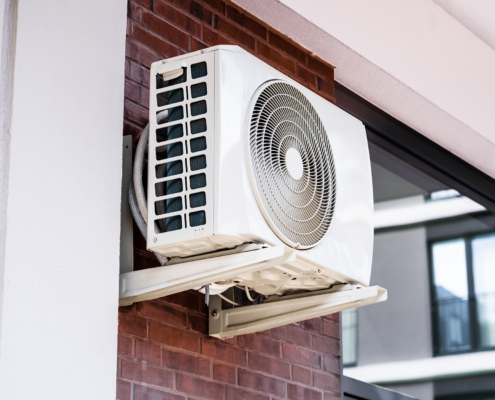
A standard mini-split consists of two components: one outdoor condenser unit and one indoor air handler (also called a “head”). In a single-zone system, that’s a one-to-one relationship — one outdoor unit serves one room or space.
A multi-zone system changes the equation. A single, more powerful outdoor condenser connects to multiple indoor air handlers — typically two to five, depending on the unit’s capacity. Each indoor head operates independently, so you can set different temperatures in different rooms simultaneously. The condenser distributes refrigerant to whichever heads are calling for cooling or heating, modulating output as demand shifts throughout the day.
This “one-to-many” design is what makes multi-zone systems so efficient: the compressor doesn’t have to cycle on and off repeatedly. Instead, it ramps up and down smoothly using inverter technology, maintaining steady temperatures with less energy consumption over time.
Can a Mini Split Cool Multiple Rooms?
Yes — but the right answer depends on which type of system you install and how your home is laid out. This is the core question behind the single-zone vs. multi-zone decision, and it’s worth addressing directly before you start comparing prices or equipment specs.
A single-zone system serves one defined space. If you’re trying to condition two or more separate rooms, a single indoor head won’t cut it — cool or warm air simply won’t travel effectively through walls and down hallways the way a forced-air system might attempt to. For homes with multiple walled-off rooms, a multi-zone system with a dedicated indoor head in each space is the right solution.
Open-concept homes are a different story. A large, open floor plan where the living room flows directly into the dining area and kitchen — without walls in between — may work well with a single, well-placed air handler. The key variable is whether there are physical barriers separating the spaces you want to condition.
Zoning also becomes a genuine comfort upgrade here, not just a marketing term. A household with family members who prefer different temperatures can set each room independently — no more thermostat battles.
Single-Zone Installation: Best for Additions and Small Spaces
Single-zone systems shine when you have a specific, isolated problem to solve. Common applications include:
- Garage conversions and workshops — spaces that were never part of the home’s original HVAC design
- Sunrooms and enclosed porches — rooms with lots of glass that gain and lose heat rapidly
- Home additions — new square footage that extending the existing duct system can’t efficiently serve
- Finished basements — below-grade spaces that struggle with humidity and temperature
- “Problem rooms” — that one bedroom that’s always too hot in summer or too cold in winter
Because a single-zone system is a straightforward install — one outdoor unit, one indoor head, a line set connecting them — it’s typically the most affordable entry point into ductless comfort. Installation is faster, and the equipment itself carries a lower upfront cost.
Multi-Zone Installation: Whole-Home Comfort Solutions
For homeowners who want to condition multiple rooms without ductwork, a multi-zone system offers a compelling package. Instead of placing a separate outdoor unit next to your house for each room you want to serve, one condenser handles the whole job. That’s a significant aesthetic advantage — especially important when you’re working with limited exterior wall space or a homeowner’s association with restrictions on outdoor equipment.
Multi-zone setups also work well for homes doing a full departure from central air. Older homes without existing ductwork, historic properties where running ducts would damage architectural features, and homes where duct replacement costs are prohibitive are all excellent candidates for a complete multi-zone ductless system.
The indoor heads can be mounted in a variety of configurations — wall-mounted cassettes, ceiling cassettes, floor-mounted units — so the system can adapt to nearly any room layout or ceiling height.
Not Sure Which System Fits Your Home? Skip the guesswork. Myrick Mechanical will walk through your space, size the right system, and give you a straight answer — at no obligation.
Cost and Efficiency: Breaking Down the Numbers
One of the most common questions homeowners ask is: Is it cheaper to buy two separate single-zone systems or one multi-zone unit? The honest answer is that it depends on scope, but multi-zone systems generally offer better value as the number of rooms increases.
A single-zone system for one room might run $1,500–$3,500 installed, depending on unit size and installation complexity. A second standalone system for a second room adds a similar cost on top — and now you have two outdoor condensers to maintain and potentially replace someday.
A multi-zone system serving two or three rooms will typically cost more upfront than one single-zone unit, but less than purchasing two or three completely separate systems. You’re also consolidating maintenance — one outdoor unit means one set of refrigerant lines to inspect, one compressor to service, and one piece of equipment at end-of-life rather than two or three.
On the efficiency side, both system types use inverter-driven compressors and operate without the duct losses that reduce traditional forced-air system efficiency by an estimated 20–30%, according to the U.S. Department of Energy. Multi-zone systems, when sized correctly, can be slightly more efficient because the single compressor modulates across the combined load of all rooms rather than cycling independently for each.
Making the Choice: Layout, Budget, and Future Growth
Here’s a simple framework for deciding:
- How many distinct rooms do you need to condition? One or two isolated spaces lean toward single-zone. Three or more rooms in the same home lean toward multi-zone.
- What’s your budget timeline? Single-zone has a lower upfront cost but a higher long-term cost if you’re adding units over time. Multi-zone costs more now but less per room as scale increases.
- Are you planning to expand? Some multi-zone outdoor units have unused ports — meaning you can add an indoor head later without replacing the condenser. This is worth discussing with your installer before you purchase.
- What does your exterior look like? If you have limited space or HOA restrictions, one multi-zone condenser is almost always the cleaner solution.
Neither system type is universally “better.” The right choice is the one that matches your home’s specific layout and your household’s comfort needs — and the best way to get that answer is with a professional load calculation and a walkthrough from an experienced installer.
Why Homeowners in Missouri and Kansas Trust Myrick Mechanical
Choosing between a single-zone and multi-zone system isn’t a decision that should be made on a spec sheet alone. The right answer depends on how your home is built, how you use each room, and what you expect from your comfort system for the next decade. That’s exactly the kind of assessment Myrick Mechanical is built to provide.
Our team has hands-on experience installing both single-zone and multi-zone ductless systems in homes of every size and age across Missouri and Kansas. We don’t push one system over another — we look at your specific layout, walk you through the trade-offs honestly, and recommend what actually makes sense for your home and budget. We handle everything from the initial load calculation to the final refrigerant charge, so you’re never left wondering if the job was done right.
https://myrickmech.com/wp-content/uploads/2026/03/Air-Conditioner-And-Heat-Pump-1.jpg
1250
2000
Abstrakt Marketing
/wp-content/uploads/2025/06/Logo.png
Abstrakt Marketing2026-03-25 15:56:492026-03-25 16:04:44Mini Split vs. Central Air: Which Is Right for Your Kansas City Home? https://myrickmech.com/wp-content/uploads/2026/03/Commercial-HVAC-worker-with-clipboard-checklist_.jpg
1250
2000
Abstrakt Marketing
/wp-content/uploads/2025/06/Logo.png
Abstrakt Marketing2026-03-13 14:26:492026-03-13 14:27:32A Commercial HVAC Maintenance Checklist for Your Building This Spring
https://myrickmech.com/wp-content/uploads/2026/03/Commercial-HVAC-worker-with-clipboard-checklist_.jpg
1250
2000
Abstrakt Marketing
/wp-content/uploads/2025/06/Logo.png
Abstrakt Marketing2026-03-13 14:26:492026-03-13 14:27:32A Commercial HVAC Maintenance Checklist for Your Building This Spring https://myrickmech.com/wp-content/uploads/2026/01/Signs-Your-Commercial-HVAC-System-Needs-Immediate-Repair.jpg
1250
2000
Abstrakt Marketing
/wp-content/uploads/2025/06/Logo.png
Abstrakt Marketing2026-01-29 15:04:362026-01-29 15:04:43Signs You Need to Call for Commercial HVAC Repair Before a Breakdown
https://myrickmech.com/wp-content/uploads/2026/01/Signs-Your-Commercial-HVAC-System-Needs-Immediate-Repair.jpg
1250
2000
Abstrakt Marketing
/wp-content/uploads/2025/06/Logo.png
Abstrakt Marketing2026-01-29 15:04:362026-01-29 15:04:43Signs You Need to Call for Commercial HVAC Repair Before a Breakdown https://myrickmech.com/wp-content/uploads/2025/12/What-Does-a-Commercial-HVAC-Maintenance-Plan-Include_.jpg
1250
2000
Abstrakt Marketing
/wp-content/uploads/2025/06/Logo.png
Abstrakt Marketing2025-12-24 09:07:102026-03-13 14:28:09What Does a Commercial HVAC Maintenance Plan Include?
https://myrickmech.com/wp-content/uploads/2025/12/What-Does-a-Commercial-HVAC-Maintenance-Plan-Include_.jpg
1250
2000
Abstrakt Marketing
/wp-content/uploads/2025/06/Logo.png
Abstrakt Marketing2025-12-24 09:07:102026-03-13 14:28:09What Does a Commercial HVAC Maintenance Plan Include? https://myrickmech.com/wp-content/uploads/2025/07/hvac-technician-installing-large-modern-heat-pump-2023-11-27-05-04-45-utc-scaled-1.jpeg
1651
2560
Xander Killebrew
/wp-content/uploads/2025/06/Logo.png
Xander Killebrew2025-07-17 19:20:282025-12-24 09:11:01Explore Eco-Friendly HVAC Options for Efficient and Sustainable Comfort
https://myrickmech.com/wp-content/uploads/2025/07/hvac-technician-installing-large-modern-heat-pump-2023-11-27-05-04-45-utc-scaled-1.jpeg
1651
2560
Xander Killebrew
/wp-content/uploads/2025/06/Logo.png
Xander Killebrew2025-07-17 19:20:282025-12-24 09:11:01Explore Eco-Friendly HVAC Options for Efficient and Sustainable Comfort